Indoor grow lights have become essential for anyone wanting to keep houseplants healthy, grow herbs, or maximize yields in apartments without sun. But with 2024 bringing more choices, fierce competition, and tons of marketing hype, choosing and setting up indoor grow lights the right way can make or break your plant’s success.
Key Takeaways
- LEDs now dominate the indoor grow lights market, with fast-rising performance and sharply falling prices.
- Most problems come from mismatched light intensity, misleading “full spectrum” claims, and poor fit for specific plants or spaces.
- Knowing your plant’s real needs—and double checking specs—is key to effective and affordable indoor gardening.
- What Are Indoor Grow Lights and Why Use Them?
- How to Choose and Set Up Indoor Grow Lights for Houseplants
- Advanced Analysis & Common Pitfalls
- Summary & Next Steps
- FAQ
What Are Indoor Grow Lights and Why Use Them?
Indoor grow lights are artificial light sources—usually LEDs, but sometimes fluorescent or HID—that replace or supplement sunlight for plants grown indoors. They deliver the intensity, color, and timing your plants need for healthy growth, flowering, and fruiting. Whether you want lusher houseplants, homegrown greens, or year-round tropicals, the right grow light bridges the gap when windowsills aren’t enough.
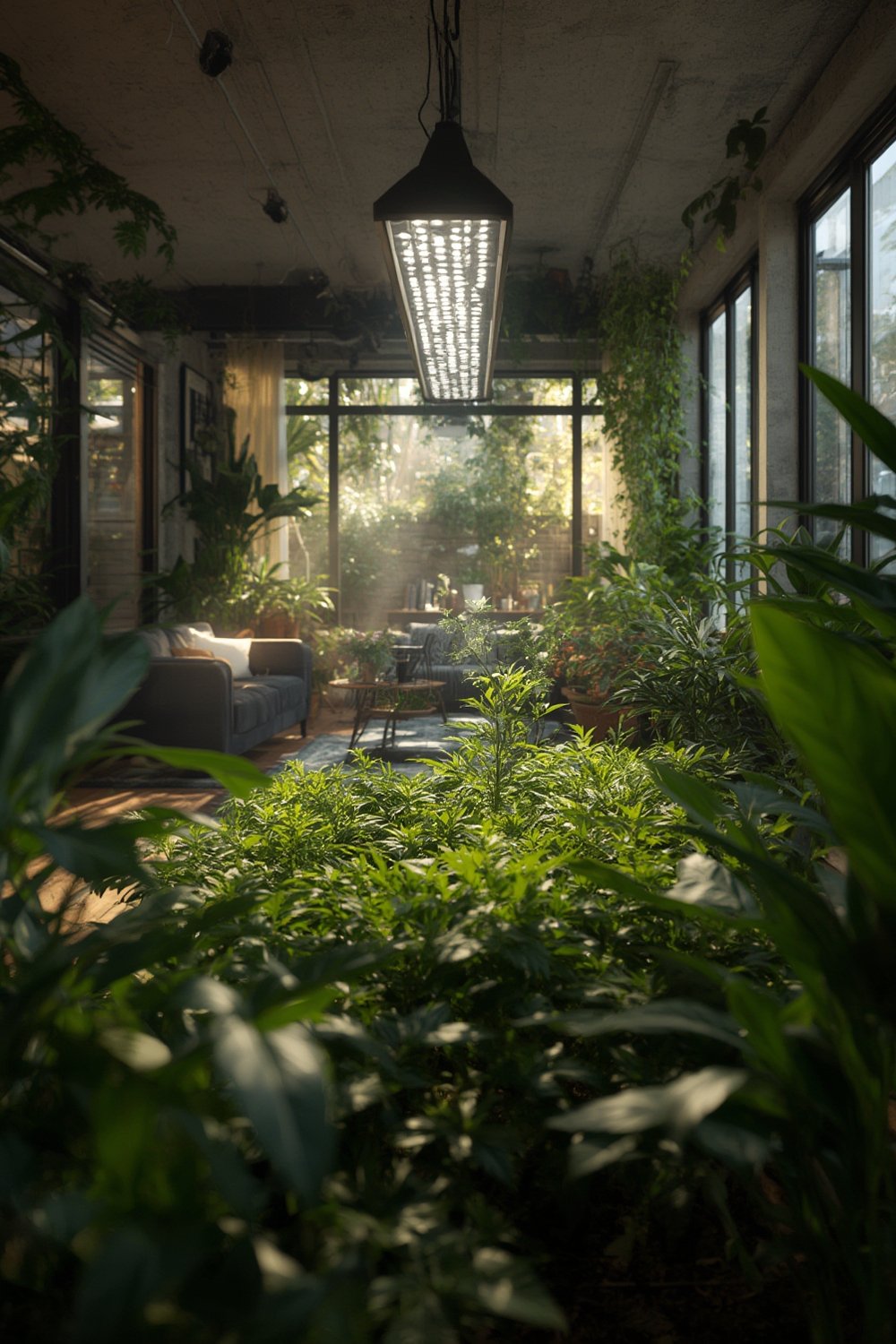
As of 2024, the global indoor grow light market is valued between USD 2.0–7.84 billion, driven by booming interest in indoor farming, vertical gardens, and a houseplant craze. LEDs have overtaken older technologies because they offer more light per watt, adjustable colors for photosynthesis, and far lower heat output. Small, energy-efficient grow lights now make it realistic to grow sun-loving plants even in dark apartments.
Using indoor grow lights lets you:
- Grow vegetables, fruit, and herbs year-round, regardless of outdoor weather or window direction.
- Keep tropical and high-light plants thriving, not just surviving, in apartments or offices.
- Control photoperiod (day length) and spectrum for better flowering or compact, healthy growth.
- Reduce pest and disease problems by avoiding overcrowded, shaded windowsills.
But just plugging in a grow bulb does not guarantee success. Houseplants’ light needs differ dramatically—and so do the strengths and weaknesses of each light type.
How to Choose and Set Up Indoor Grow Lights for Houseplants
Getting the most out of indoor grow lights starts with understanding your plant’s needs and space. Here’s a step-by-step approach anyone can use, whether you’re growing a few succulents or building a lush, living wall.
-
Identify your plant’s true light needs.
- Succulents, cacti, and most flowering or fruiting plants want the most light: aim for PPFD 200–400 µmol/m²/s, 12–14 hours/day.
- Common foliage houseplants (Monstera, pothos, peace lily) thrive with 75–200 µmol/m²/s, 10–14 hours/day.
- Ferns or low-light species may be happy with as little as 50–100 µmol/m²/s.
Quick-reference DLI (Daily Light Integral) targets for common plants are often missing from guides. For full planning, check PAR/PPFD maps from serious manufacturers or meter your light on-site if possible.
-
Pick the right grow light type.
- LED: Usually best for efficiency, longevity, and spectrum control. Today’s best “full spectrum” LED lights combine white diodes with deep red (and sometimes far-red or UV) for robust, balanced plant growth. Choose models with published efficacy (µmol/J) and PPFD maps.
- Fluorescent (T5/T8/CFL): Okay for budget or single-plant use, but less efficient and shorter-lived than modern LEDs. Still popular for seed starting.
- Compact “grow bulbs”: Acceptable for isolated plants, but coverage and intensity usually fall short for serious multi-plant setups.
See more tech specs and comparisons in our in-depth table below.
-
Match light size to your grow area.
- Manufacturers often exaggerate coverage area! For high light, most 40W–60W panels/bars cover 2×2 feet at best. For all-over coverage, consider multiple fixtures or modular bars.
- If growing on shelves, measure both horizontal and vertical clearances—leave space to adjust distance for different plant species.
-
Mount at the right height and angle.
- Start lights 12”–18” above the tallest plant canopy (adjust as needed—closer for low-output bulbs, farther for high-powered bars).
- Watch plant response—too close can burn leaves (especially for low-light species), too far gives weak, leggy growth.
- Opt for fixtures with built-in diffusion or add sheer fabric to cut glare in your living space.
-
Set the right photoperiod and dim/adjust as needed.
- Use automatic timers to give most houseplants 12–16 hours of light per day (mirrors summer daylight).
- Some modern lights have dimming or veg/bloom modes; ignore “bloom” setting on foliage plants—it often just adds red, not needed for non-flowering leaves.
Want to reduce plant maintenance? Explore self watering planters to keep soil balanced while optimizing your lighting schedule!
-
Monitor plants and tweak setup.
- If leaves get pale, bleached, or crispy, raise or dim the fixture—or try a lower-watt model.
- If plants are weak, stretching, or losing color, increase intensity or bring the fixture closer.
- Check for hotspots (hot to the touch = too close) and address humidity if excessive heat builds up in small spaces.
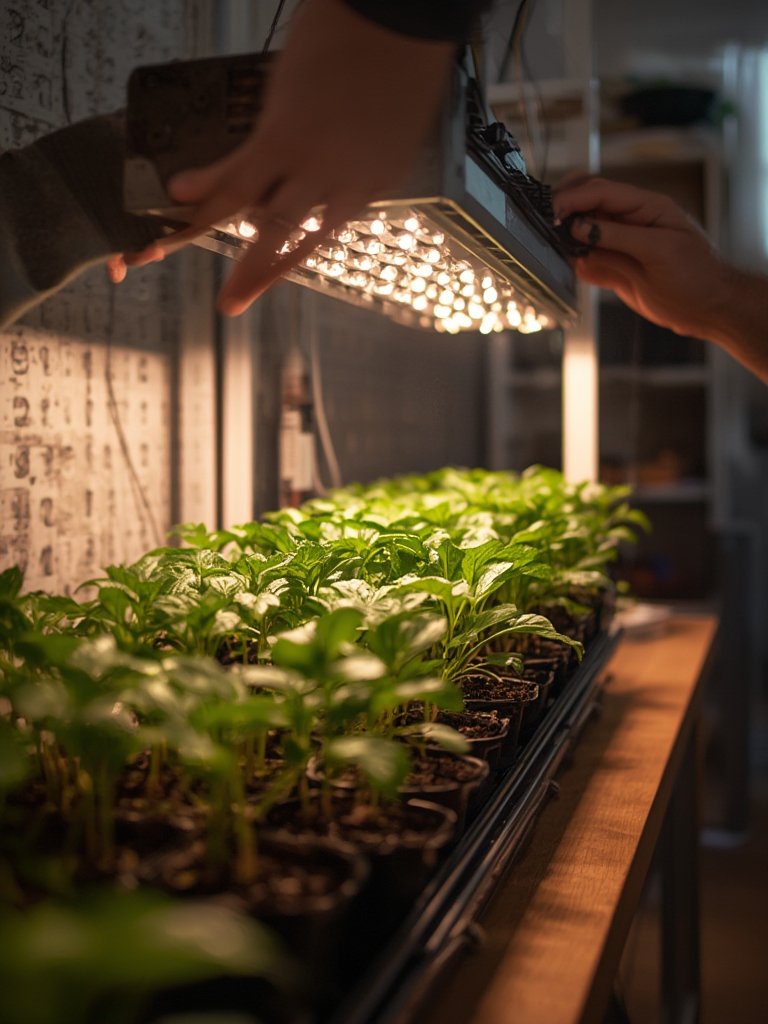
For energy savings, consider running lights during off-peak hours, and always compare your expected total power usage to past electricity bills. As with electric lawn mowers, modern tech cuts energy use long-term, but only if sized and programmed right.
Need more efficiency for large plantings? Modular light bars, like those found in modular outdoor furniture setups, let you easily expand or rearrange your lighting as your collection or layout evolves.
Advanced Analysis & Common Pitfalls
Even with the best intentions, many new users run into the same issues with indoor grow lights. Here’s what most guides miss—and how to sidestep the common traps.
1. Mismatched Intensity and Coverage
- Overdoing intensity: Powerful LEDs can cause leaf scorch, especially on shade-loving species. Check for bleached or curled leaves.
- Under-doing intensity: Many cheap or single “grow bulbs” look bright, but deliver poor PPFD over more than a few inches. Plants stretch, flop, or lose variegation colors.
- Unreliable coverage: Small “spotlight” fixtures often leave dim corners, causing uneven growth. If a manufacturer claims a 40W panel covers 4×4 feet—be skeptical.
For reliable plant hydration alongside lighting, an automatic plant watering pot can help maintain a healthy balance while you tweak your setup.
2. The “Full Spectrum” Label Trap
Many lights advertise “full spectrum” but only provide spikes in blue and red light, completely missing important green/yellow or far-red wavelengths. True full spectrum lights:
- Cover 400–700nm PAR (plus, ideally, some 730nm far red and 380nm near UV).
- Provide continuous or broad spectral curves (not just blue/red peaks).
- Publish actual SPD (Spectral Power Distribution) and PPFD maps—not just pretty graphs or “equivalent watts.”
3. Real-World Product Comparison
| Type | Typical efficacy (µmol/J) | Approx lifespan (useful hours) | Heat & efficiency | Upfront cost | Plant growth effectiveness (home use) |
|---|---|---|---|---|---|
| LED | ~1.5–3.0+ | ~30,000–50,000+ | Cool, high PAR/watt | Falling; wide budget-premium range | Excellent if sized right; watch for overlighting |
| Fluorescent (T5/T8/CFL) | ~0.6–1.2 | ~8,000–20,000 | Moderate heat | Low-moderate | Fine for foliage/seedlings; less efficient |
| HID (HPS/metal halide) | ~1.0–1.7 | ~10,000–20,000 | High heat; needs venting | Mid-high | Best for large/high-light grows; overkill for houseplants |
| Incandescent/halogen | Very low | ~1,000–2,000 | Very high heat | Very cheap bulbs | Poor/obsolete today |
For herbs and fruiting crops, the right “full spectrum” LED can outperform any other type at equal power—if you check real specs. For even more reliability with less fuss, consider integrating ergonomic accessories to optimize your workspace/grow zone and reduce maintenance time.
4. Common User Complaints and Solutions
- Heat buildup: Even “cool” LEDs can warm a small tent or room. Provide airflow, and choose passively-cooled models if fan noise is a concern.
- Operating costs: Underestimate lighting needs and you’ll get poor results; overestimate them and you’ll be surprised by higher electric bills. Aim for the middle by cross-checking published wattage and calculating total runtime.
- Poor build quality: Cheap online imports often fail within a year, with weak warranties and unreliable “full spectrum” claims.
- Ugly design/glare: Many grow lights look industrial. Seek fixtures with attractive housing and “white light” spectrum (CCT 4000–5000K, added red 660nm) for visually pleasant home integration.
Want robust plant growth with less worry? Raised garden beds can be combined with modular grow lights for easy reach, top drainage, and predictable lighting results indoors or out.
5. What Most Blogs Skip: Lifetime Costs, Hard Numbers, and Real Spectrum Data
- Few guides break down total cost of ownership. LEDs usually cost more upfront but pay off with lower power bills and longer life. For example, a 100W LED ($150) may use $70/year in electricity, while a 200W fluorescent rig ($100+ $30 bulbs/year) uses $140/year.
- Very few sources display usable PPFD maps. For authoritative data, see this industry analysis of global LED grow light performance.
- Always ask for independent spectrum/PPFD measurements—just as you would read technical specs before buying a robot lawn mower or any automated home device.
Summary & Next Steps
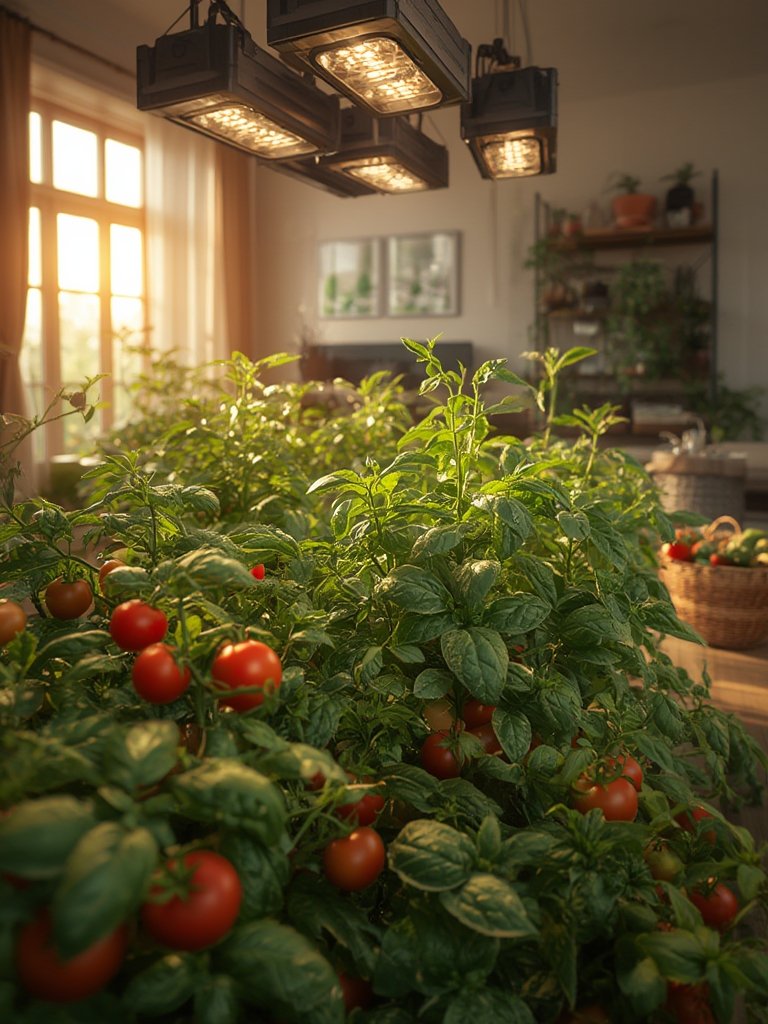
Choosing and setting up indoor grow lights is much more than picking the cheapest bulb on Amazon. Matching fixture size, spectrum, and intensity to your specific collection delivers healthier, more vibrant plants and saves money over time. Be wary of overblown “full spectrum” promises, undervalued running costs, and the risk of over or under-lighting. If you want year-round growth, reliable flowers, and thriving houseplants, invest time in learning to read real specs—not just marketing.
If you’re ready to upgrade your plant setup, start with quality indoor grow lights, measure your area, and get growing—your plants (and your electricity bill) will thank you.
FAQ
Are LED grow lights safe for home use?
Yes, as long as they’re used per the manufacturer’s instructions and not stared at directly. Quality fixtures stay cool and don’t emit harmful UV. Look for safety certifications and avoid the cheapest models with questionable electrical components.
How close should indoor grow lights be to my plants?
Generally, start LEDs 12 to 18 inches above the plant canopy. Adjust based on plant response: too close can cause burn, too far leads to stretching. Low-light plants need even more distance or reduced output.
Which houseplants benefit most from indoor grow lights?
Sun-loving plants like succulents, cacti, orchids, fig trees, and fruiting varieties benefit most. Low-light plants like ferns or ZZ plant require much less intensity and can be damaged if over-lit.
What does “full spectrum” mean on a grow light?
True “full spectrum” means the light covers the 400–700nm range (PAR), including blue, green, and red light, plus sometimes far-red or near-UV. Beware of lights offering only red and blue “blurple” output—they may not support complete plant development.
How much should I spend on a high-quality indoor LED grow light?
Expect to pay $40–150 for small fixtures covering 1–4 plants, $100–300 for mid-size (2×2–3×3 ft), and $250+ for large 4×4 ft setups. Avoid ultra-cheap options—they often misrepresent wattage and lack warranty support.