Fire pit table sales are booming worldwide as homeowners look for smart, multifunctional ways to heat and entertain outdoors. Choosing the right fire pit table isn’t always straightforward—hidden costs, material issues, and safety codes can lead to frustrating surprises. This guide delivers practical answers, real data, and solutions based on 2024’s top market trends and user experiences.
Key Takeaways
- Gas fire pit tables—especially propane and steel models—are the fastest-growing category, often doubling market value by 2030.
- Heat output rarely matches marketing claims. Table design, wind, and fuel type all impact real-world warmth and running costs.
- Certification, code compliance, and maintenance vary. Check safety labels and hidden long-term expenses before you buy.
- What Is a Fire Pit Table and Why Are They So Popular?
- Step-by-Step: Choosing and Setting Up Your Fire Pit Table
- Advanced Analysis: Pitfalls, Complaints, and Smart Fixes
- Conclusion
- FAQ
What Is a Fire Pit Table and Why Are They So Popular?
Fire pit tables are patio centerpieces that combine an outdoor table with a built-in fire pit—usually powered by propane or natural gas—to provide heat, ambiance, and a practical surface for dining or drinks. Since 2022, these units have surged in demand thanks to expanding outdoor living trends, the desire for multi-functional furniture, and a wave of available styles and materials.
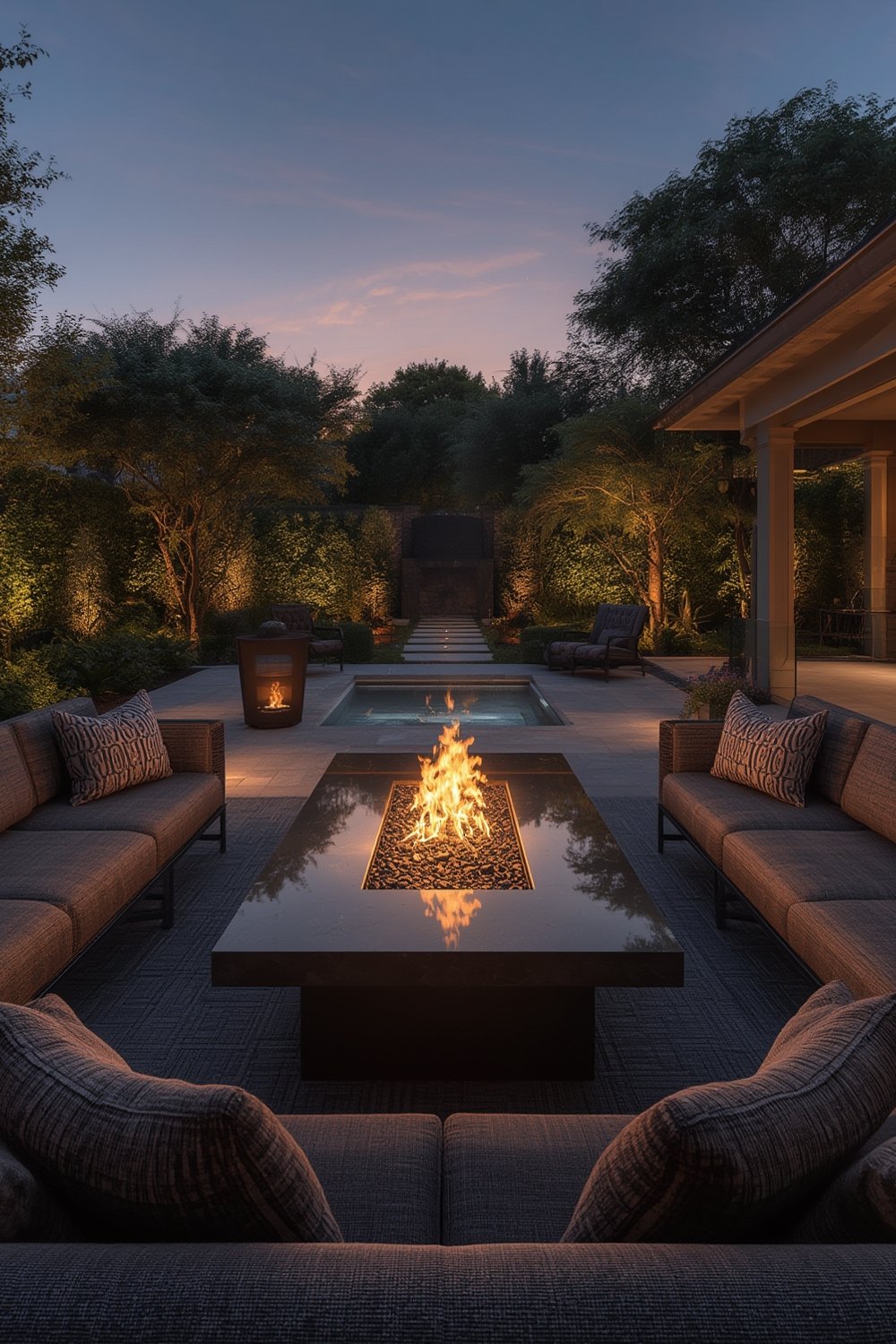
In 2024, the global gas fire pit table market hit $80–89 million, driven by North America’s patio culture and European homeowners seeking year-round outdoor comfort. Propane remains the top choice—over 75% of 2024 fire pit tables use it—because it’s easy to install and delivers instant flames, while natural gas models are gaining ground due to lower long-term running costs and cleaner operation. See industry sources.
Steel and aluminum frames dominate because they balance strength, looks, and weight, but composite and stone tops are popular for design-conscious buyers. Multi-functionality is on the rise: many tables convert between a standard table and a heater, sometimes even offering grilling or cooking features alongside visual appeal.
For a complete outdoor setup, many users also invest in solar outdoor lights and modular outdoor furniture to extend usability past sunset and personalize their space.
Step-by-Step: Choosing and Setting Up Your Fire Pit Table
To get more than just good looks from your fire pit table, follow these actionable steps:
- Choose your fuel: propane vs. natural gas vs. wood. Propane is portable and easy; natural gas requires an installed line but costs less per hour; wood has visual charm and lower hardware cost but means more cleanup and some local smog restrictions.
- Pick the right material for your climate. Aluminum and high-grade stainless steel last best in wet or coastal climates. Powder-coated steel is affordable but needs covering and can rust if scratched. Composite/stone tops add visual appeal but require sealing in freeze–thaw regions.
- Size for your space—and your guests. Plan for a comfort radius: most gas fire tables warm only 2–3 feet away in real conditions. Pick seating to angle guests nearer the flame. For small patios, oval or rectangular tables offer maximum usable ledge area.
- Demand safety certifications. Look for clear CSA/UL or CE/EN labels for gas tables. Check side, top, and bottom clearance info—never place units directly on wood/composite decking without a non-combustible pad or specified heat shield.
- Budget beyond the sticker price. Add annual fuel costs (propane: $100–$200+, gas: less but needs install), cover replacements, and occasional repairs (igniter, hoses, repaint). Compare 5–10 year costs if you’re considering steel vs. aluminum or premium stone units.
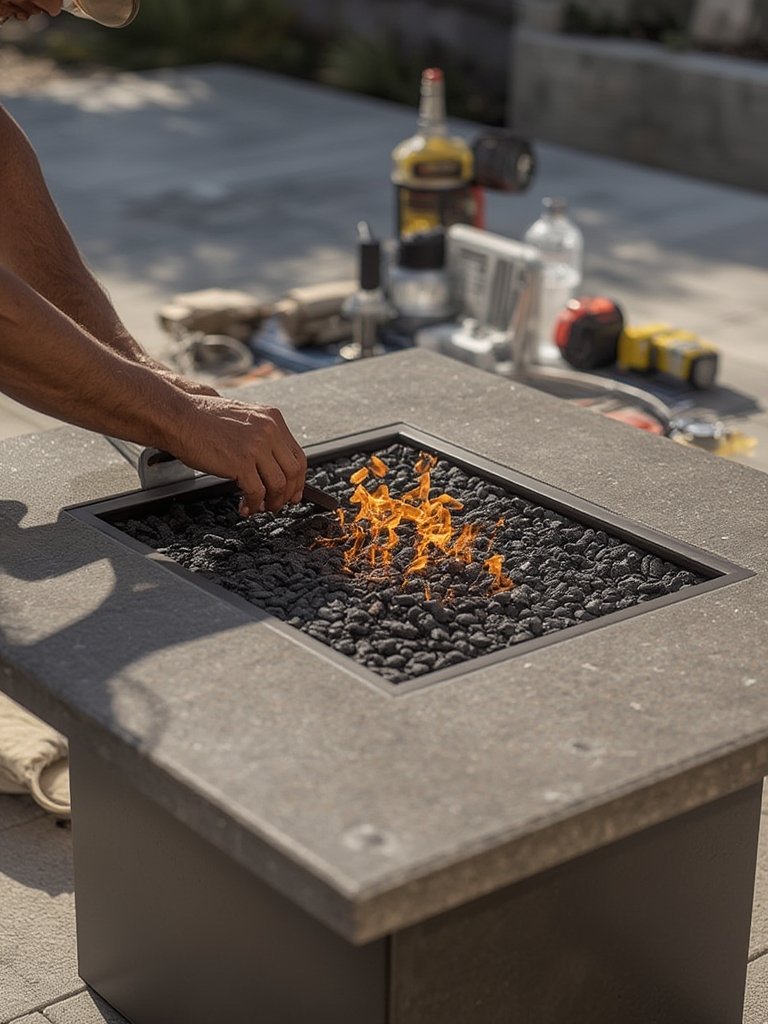
- Assemble carefully—don’t rush. Expect 2+ hours and two people for most full-featured tables. Lay out every part, double-check gas connections, and verify no leaks with a soapy water solution before lighting up.
- Maximize both heat and tabletop function. Use split burner lids, low glass wind guards, and removable surface panels. Zone your table: keep plates at the ends, drinks near—but not above—the open flame.
If you want to minimize plant care alongside your outdoor setup, consider adding self watering planters or outdoor storage boxes for a fully low-maintenance, functional backyard environment.
Advanced Analysis: Pitfalls, Complaints, and Smart Fixes
Common User Complaints
- Heat disappointment: Most new buyers expect heat like a campfire, but real-world comfort radius is typically 2–3 feet on a cool evening. Designs with wide tabletop lips, deep burner recesses, or excessive media often deflect heat upward, not outward.
- Rust and finish failures: Unprotected or thinly painted steel rusts quickly, especially around welds and drain holes. Even “stainless” may tea-stain outdoors. Composite wicker can crack or fade from UV. Moisture under covers can turn surface chalky.
- Safety issues: Gas leaks traced to loose fittings, improper thread sealant use, or debris in burners. Burner flare-ups or unstable flame usually result from clogged jets or incorrect installation. Some tables tip on uneven patios; others scorch wooden decks when placed with insufficient clearance.
- Assembly headaches: Many users face incomplete instructions, missing or mis-labeled bolts, and poor fit-and-finish leading to wobbly legs or stubborn doors.
- Misleading BTU and costs: Sticker BTU rating doesn’t equal real warmth; table and burner design can halve effective heating. Propane costs add up sharply for frequent use. Natural gas saves money over time but installation can be expensive upfront.
What Most Guides Miss
- They rarely explain table design’s impact on heat, making comfort unpredictable. BTU isn’t the whole story; media type and wind factors matter as much as burner specs.
- Few guides compare lifetime costs—cheaper steel may rust out in three years, while premium aluminum or sealed granite may last a decade for a higher up-front price but less repair and cover replacement.
- Regulatory and certification demands can be strict, especially for multifamily balconies, decks, or HOA properties. Unlabeled models may leave you uninsured or in violation of local codes.
Material Comparison: Fire Pit Tables
| Material | Longevity & Durability | Weather-Resistance | Appearance & Aging |
|---|---|---|---|
| Carbon steel | Strong but prone to rust unless well-coated; welds and hardware often fail first. | Needs high-grade powder coat or paint; avoid pooling water. | Modern look; can fade or chip; patina may be unwanted on tabletop. |
| Stainless steel | Great structural longevity, especially 304 grade or better. | Resistant, but can tea-stain—especially near the coast. | Sleek, contemporary; shows fingerprints and burner discoloration. |
| Aluminum | Light and won’t rust; can dent if hit hard. | Very resistant—good for wet or coastal zones. | Powder-coat holds color; modern vibe but may feel less “solid.” |
| Concrete / fiber-cement | Lasts long; chip-prone if dropped or knocked. | Can absorb moisture and develop hairline cracks if not sealed. | Smooth, architectural look; needs upkeep to avoid stains and cracks. |
| Composite / wicker on frame | Durability tied to frame type; resin can crack from UV. | Needs UV-protected resin; frame must be well-coated to avoid hidden rust. | Furniture-like style; fading and fraying after years outdoors. |
| Tile or stone over substrate | Cracks and grout flaws common after freeze or heat cycles. | Porous grout and substrate can let in water; not for harsh winters without sealing. | Upscale and decorative; cracks are a recurring user complaint. |
For a full breakdown on outdoor fire pit material performance, check this third-party market report.
Smart User Fixes and Workarounds
- Use partial burner covers to keep drinks handy but expose flame for heating.
- Raise seats or select models with the burner closer to table height to maximize warmth.
- Install glass wind guards and/or create simple windbreaks with planters or screens.
- Regularly check fittings with soapy water, especially after winter storage or moving the table.
- Use raised garden beds and indoor grow lights for four-season outdoor living to complement your setup.
Insist on safety certifications:
- North America: CSA, UL, or ANSI Z21.97 labeling for gas patio tables; always request documentation for HOA or insurance needs.
- Europe: CE and EN 498 or local gas appliance specifics. Watch for clear labeling on gas type, max BTU, and “for outdoor use only.”
Installation rules on decks and balconies differ widely—always check fire codes and building regs before use.
Conclusion
Done right, a fire pit table is a reliable, stylish way to extend your patio living season—but only if you plan around real heating radius, lifetime costs, and local codes. Budget for more than fuel: covers, replacement igniters, and surface touch-ups add up. Always insist on certified safety labels. With these strategies, your fire pit table can become a true backyard asset—not a constant headache.
Ready to make your outdoor space work all year? Browse market-leading patio fire pit tables, or explore modular outdoor seating to create your ideal gathering zone.
FAQ
How much heat will a gas fire pit table actually produce?
Most consumer gas fire pit tables (40,000–60,000 BTU) create a comfort zone about 2–3 feet from edge of the flame, especially in cool evenings. Tabletop design, burner depth, wind, and media all impact real warmth, often less than you expect from the BTU rating.
Can I put a fire pit table on a composite or wood deck?
Only if the table has certified clearances (usually 24–60 inches on all sides) and either a built-in heat shield or non-combustible pad below. Never place units directly on wood or composite without checking manufacturer instructions, fire codes, and insurance rules.
Which is cheaper to run: propane or natural gas fire pit tables?
Propane costs about $1.20–$1.60 per hour at medium flame in 2024. Natural gas is usually half as expensive per hour—but requires a home gas line and professional installation, which costs more up front.
What safety certifications should I look for?
In North America, seek CSA, UL, or ANSI Z21.97 labels. In Europe, look for CE and EN 498 compliance. Always ensure labels match your country and show details like gas type, maximum BTU, and outdoor-only use.
What maintenance does a fire pit table need?
Replace covers every few years, check ignition and hoses for leaks at the start of each season, and touch up any scratches to prevent rust. Clean media and burner area regularly; store indoors or use snug covers to prevent water damage and finish fading.