Pet water fountain systems are transforming how owners keep cats and dogs hydrated, combining health-driven benefits with convenience, but also bringing specific new challenges compared to old-school water bowls.
Key Takeaways
- Pet water fountains promote healthier hydration in cats and dogs but require dedicated cleaning and filter maintenance.
- Fountain adoption is rising, led by urban owners, yet actual usage still represents a minority of pet households globally.
- Key buying decisions should factor in real-world ownership costs, material safety, noise, and ease of cleaning—not just upfront price.
- How Pet Water Fountains Work & Why Owners Choose Them
- How to Choose & Maintain the Right Pet Water Fountain
- Advanced Analysis: Problems, Pitfalls & Unspoken Costs
- Conclusion: Should You Switch to a Pet Water Fountain?
- Frequently Asked Questions
How Pet Water Fountains Work & Why Owners Choose Them
A pet water fountain is an automatic pet water dispenser that continually circulates and filters water, aiming to keep it fresher and more appealing than a stagnant bowl. Most models use a small, low-voltage pump to move water through mechanical and/or carbon filters, creating either a bubbling surface or flowing stream.
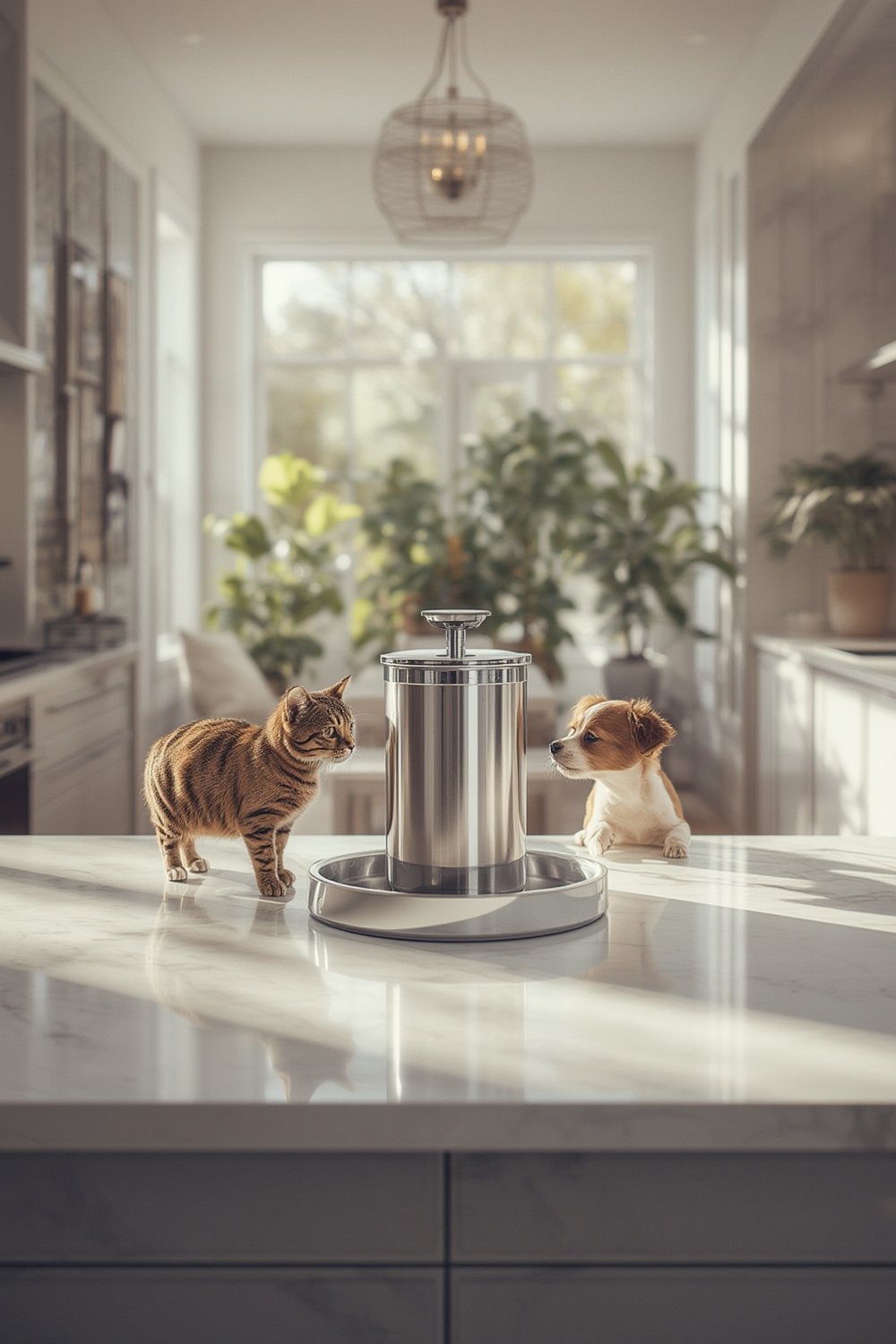
The main reasons owners upgrade from bowls to fountains are:
- Hydration and health: Flowing, filtered water encourages drinking, which is especially important for cats prone to kidney or urinary tract issues.
Veterinary guidance supports use of fountains for cats with low thirst drive. - Cleaner, fresher water: Circulation and filtration remove debris and odors, making water more palatable for pets and reducing risk of bacterial growth.
- Convenience and automation: Fountains hold more water than standard bowls and reduce the frequency of refilling, especially for busy or multi-pet households.
Despite these benefits, data indicates pet water fountains account for only around 7–10% of the global pet feeding and drinking accessory spend in 2024—meaning most owners still use traditional bowls. However, the automatic/flowing pet fountain segment is growing faster than the overall feeding/drinking category, especially in urban markets where owners seek solutions that cut daily chores and address pet health problems sooner.
For more on automatically hydrating plants rather than pets, check out our guide to self watering planters for plant owners.
How to Choose & Maintain the Right Pet Water Fountain
Picking the right cat water fountain or dog fountain is not just about buying the first model you see. Here’s a practical step-by-step approach for getting better results and controlling ownership costs.
-
Decide: Cat, Dog, or Both?
- Choose a size/capacity that fits your pet(s). For multiple cats/dogs, larger reservoirs (3-4L+) save on refills.
-
Select Material:
- Plastic (BPA-free) is affordable, but scratches and biofilm can accumulate over time.
- stainless steel is more hygienic and easier to sanitize, receiving higher reviews for odor-control and perceived longevity.
- Ceramic looks premium and dampens noise, but is heavier and easier to crack.
If material safety is key, see our buyers’ guide on orthopedic dog beds for allergy-sensitive pets.
-
Check the Filtration System:
- Look for multi-stage filtration: foam/mesh pre-filter (for hair and debris) plus carbon or ion-exchange (for taste/odor).
- Confirm filters are widely available and affordable. Proprietary cartridges vary in price (see 2024 filter cost breakdown).
-
Assess Cleaning and Maintenance:
- Choose designs that fully disassemble and have fewer tiny crevices.
- Opaque or covered tanks make slime/biofilm hard to see; clear reservoirs are easier to monitor.
- Consider whether parts are dishwasher-safe (except pump/filter).
-
Evaluate Noise and Pump Longevity:
- Look for owner reviews about actual noise (not just “ultra-quiet” marketing claims).
- Some models offer adjustable flow for timid pets.
- Premium options feature dry-run protection to prevent pump burnout if water runs low.
-
Budget for Ownership:
- Factor in annual filter replacements (USD 25–80+ per year), pump replacement (every 1–3 years), and cleaning tools.
- Smart/IoT and designer models target premium buyers, ranging up to $200+ in 2024 per market data.
-
Placement:
- Set up away from litter, food, and noisy appliances. Consider a small water-absorbent mat underneath.
-
Owning & Maintaining:
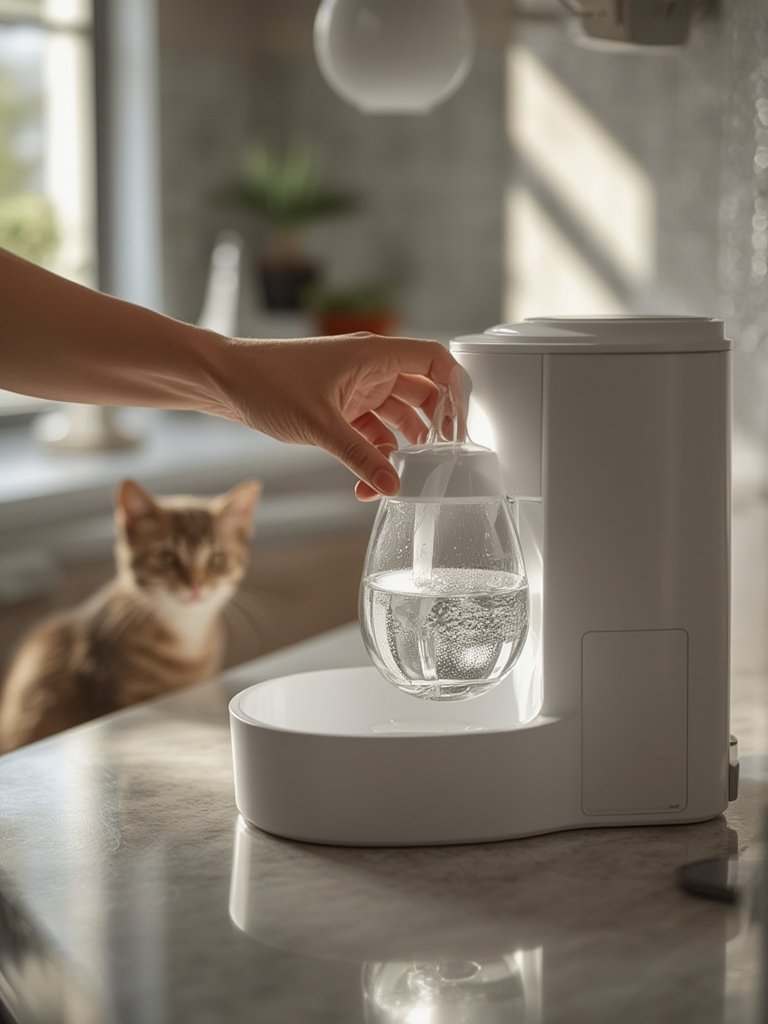
- Top up water daily or every 2 days—never let the pump run dry.
- Rinse visible hair/debris as needed.
- Disassemble and scrub the full fountain (including the pump impeller) each week or two.
- Replace filters on schedule—even if water looks clean.
- Descale monthly if you live in a hard-water area (use vinegar soaks as recommended).
If your goal is to automate more of your pet care routine, consider pairing a fountain with a smart pet feeder for feeding on schedule when away.
Advanced Analysis: Problems, Pitfalls & Unspoken Costs
Even the best-rated pet water fountains can present issues overlooked by marketing or blog reviews. Here are the most common pitfalls to watch for—along with a direct comparison table of segments, costs, and hidden drawbacks.
- Pump failures & short lifespan: Burnout is a top complaint, especially when fountains run dry or when proper cleaning protocol isn’t followed. Replacement pumps cost extra and aren’t always readily available.
- Persistent or sudden noise: Owner reviews often cite increasing noise after a few months, especially as pumps gather debris or scales.
- Filter cost & availability: Regular replacements can multiply annual cost beyond bowl use. Not all filter types are available from third-party suppliers.
- Challenging cleaning: Most models require full disassembly and special brushes weekly to prevent slime or algae, especially plastic models.
- Material hazards: Low-cost plastics can scratch and harbor bacteria long-term. Stainless or ceramic reduces this risk but raises price and breakage risk.
- Pet rejection: Cats (or small dogs) may ignore or fear the fountain. For anxious pets, models with gentle bubbling (not open streams) often succeed better.
| Segment | Typical Price (USD) | Pros | Common Cons / Pitfalls |
|---|---|---|---|
| Budget (Plastic, Basic) | 15–30 | Affordable, lightweight, easy to find | Scratches easily, can develop odors/slime, noisier pumps, higher likelihood of short lifespan |
| Mid-Range (Stainless/Plastic Hybrid) | 30–70 | Balance of price and quality, better filtration, quieter, stainless tops, easier to clean | Still requires dedicated cleaning, premium filters may cost more, some pump noise persists |
| Premium (Ceramic, Smart) | 70–200+ | Low noise, designer materials, app/sensor features, bigger capacity | Fragile, expensive, tech features may fail, high filter/pump replacement cost |
Further hidden costs might add up: cleaning tools, extra electricity (though minimal), pump replacement after 1–3 years, and water tray/mat for splash-prone or playful pets. For those seeking truly low-maintenance solutions outdoors, you might be interested in our robot lawn mower insights.
Conclusion: Should You Switch to a Pet Water Fountain?
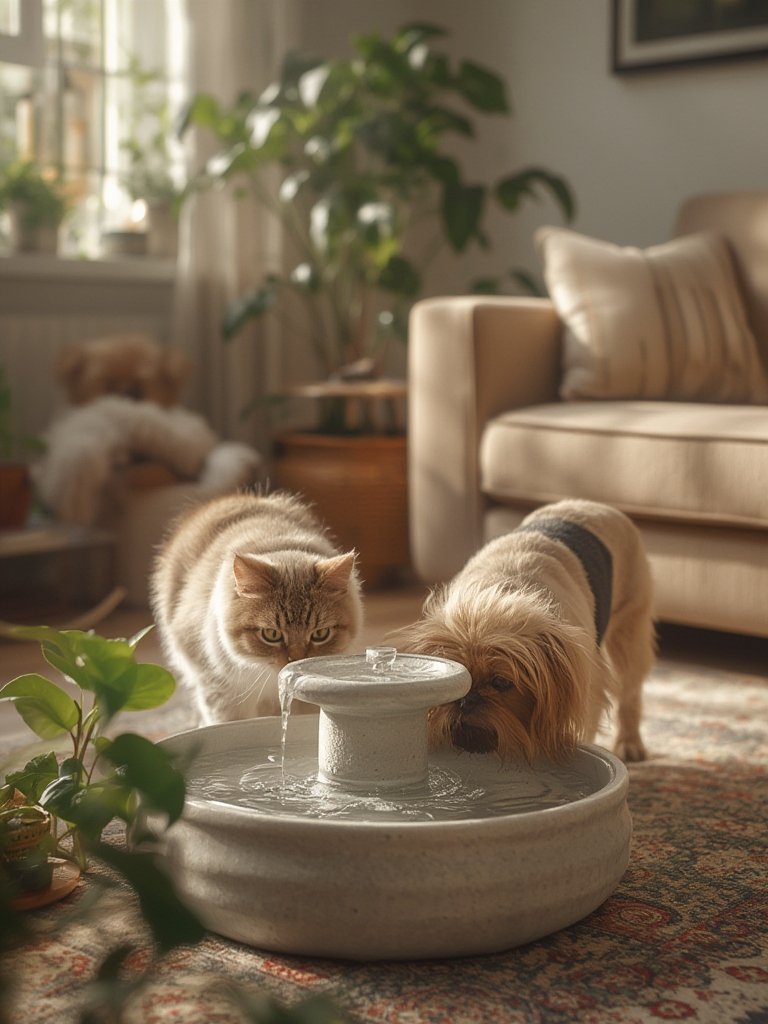
Pet water fountains offer proven hydration and health value—especially for cats and dogs who ignore bowls, or pets at risk of urinary or kidney issues. However, buyers should weigh the ongoing costs of filters, the time commitment of cleaning, and the risk of pump or material failures. For the healthiest pets and least frustration, invest in a model that is simple to disassemble, uses widely available filters, and matches your pet’s drinking style.
If a pet water fountain could help your cat or dog drink more, try it out and monitor how your pet responds—then stay consistent about replacing filters and deep-cleaning. Want a more personalized recommendation? See our latest reviews or home workspace solutions for pet-friendly homes.
Frequently Asked Questions
Do pet water fountains really help cats or dogs drink more?
Yes, research and veterinary consensus support that flowing water encourages many cats (and some dogs) to drink more compared to stagnant bowls. This can improve urinary and kidney health, especially in at-risk pets.
How often do I need to replace filters in a pet water fountain?
Most manufacturers recommend replacing carbon filters every 2–4 weeks and foam/mechanical filters every 1–3 months. Multi-pet or dusty homes may require more frequent changes.
How do I clean a pet water fountain and how often?
Rinse visible debris daily or every other day. Fully disassemble and deep-clean the fountain, including pump impeller, at least every 1–2 weeks. Use a mild dish soap and dedicated cleaning brushes for best results.
Are stainless or ceramic fountains safer than plastic ones?
Stainless steel and ceramic models are considered more hygienic as they resist scratching, staining, and biofilm growth. Plastic is lower cost but can scratch easily and retain odors or slime.
Can a pet water fountain be used for both cats and dogs?
Yes, but check the capacity and drinking height match your pets’ needs. Larger dogs or multi-pet households may need a larger reservoir to avoid daily refills.